

Having now undertaken two project off-road/overland 4×4 vehicles, I feel confident enough to share my experiences in their modification. I learned the importance of priorities with my Jeep Cherokee Bonnie Blue, and the importance of doing research in depth with my Toyota Tacoma Challenger. With my latest project, I hope to bring together these experiences and learn some new lessons in rigging out my third expeditionary vehicle.
My latest project is a brand new 2021 Toyota Tundra TRD Pro Double Cab 5.7L V8 in “lunar rock” which I have christened Columbia.
In undertaking this task, I decided to draw up a list of the priority mods in order to take my stock Tundra off-roading in the Blue Ridge. These are what I would recommend anyone getting started in the hobby install on their rig ahead of any other mods. These “Top 5” items will help secure your investment, protecting your vehicle against major damage up front. All of these mods are meant to be DIY, too!
Disclaimer: I have not been paid, sponsored, approached, approved, reproved, or promised any kickback for what follows. It is all my personal opinion, but off-roading companies are encouraged to contact me with sponsorships or deals!
1. Differential & Transfer-Case Breather Extenders

This is so important, it should be #1 for any car you buy: differential and transfer-case breathers and breather extenders! If you think you may have to cross high water or plan to do some wallowing in mud, you should absolutely install these little “hose and snorkel” kits to your differential and t-case factory breathers. You install the “snorkel” end somewhere up high, like at the top of your engine bay or high up in your bed, running the tubes from the diff/t-case to them. This will ensure that mud and water do not contaminate their pressurized insides. If clogged, a differential may blow seals from the atmospheric imbalance, while water in there will ultimately eat it from the inside.

Any car I have in the future will have these installed first thing!
On Amazon, you can find industry-leader ARB and replacement kits.
2. Magnetic Armor
With both my Cherokee and Tacoma, one of the most distressing results of off-roading were the claw-like marks running the length of the vehicle. Although some trails are worse than others, the reality is that foliage will scratch up your rig’s paintjob. One option is to bedline the whole damn thing and be done with it – but before you do that, consider protecting your paintjob with a decal or magnetic armor instead! There are now a number of companies churning out thick plates of magnetic sheeting that you just slap on the side of your rig and go. Once you’re home, peal it off, wash it off – but your truck doesn’t look like you go into a fight with a tiger.

G.O.A.T. (Go Offroad Armor Tech) out of Castle Rock, Colorado, is where you want to go if you’re a Toyotaphile like me or if you have a Chevy Colorado. They’re who I am ordering from, though because they only have armor for the Tundra CrewMax and not the Double Cab, I will be modifying it by hand – stay tuned! They have fantastic customer service who are patient and responsive. Check them out here.
MEK Magnet appears to be one among many for Jeep aficionados, and I am also aware that Smittybilt likewise makes them for Wranglers.
3. Armor Skid Plates
If you take a second to look under your vehicle, you will see a lot of things that look like they probably should not get hit by a rock. Puncturing your gas tank or bending your exhaust doesn’t sound that bad until you actually have to deal with both eventualities. I have done both and, like anyone else, immediately regretted not taking greater precautions in advance.

Your specific vehicle will have its own particular priorities in what to cover in armor, but in general you want to have: (1) a forward engine bay skid plate (standard with many TRD models), (2) a transmission skid plate, and (3) gas tank skid plate. In the case of Tacomas, they have these funky low-hanging exhaust pipes that requires either modification or armoring over.
I am personally fond of RCI Off Road out of Loveland, Colorado. I equipped my Tacoma with their three-plate skid package (pictured) and will be equipping the Tundra with their two-plate skid package and their fuel tank skid. If you have a Toyota, I recommend going with them!
Skids for every off-road vehicle can be found on standard 4×4 websites like 4-Wheel Parts, brand-specialist websites like Quadratec, and even Amazon. With the Cherokee, I went with Tomken for their gas tank skid and Rusty’s Off-Road Products for their forward skid plate/frame stiffener.
4. Rock Sliders
These are basically the skids for your rocker panels, that portion of your vehicle that runs beneath your doors. An impact to that panel will make for a bad day, potentially bending your door, popping it out of place, or jamming it shut. Fixing the rocker panel is something that you do not want to have to do, and what better way to avoid that problem than by armoring it up?

With the Tundra, I will be going to RCI for their rock sliders, which include “kickouts” (pictured). These strange jutting parts at the back are intended to keep the rest of your vehicle from taking the brunt of a rock or a tree if you get too close. There are all kinds of rock sliders out there, but make sure to distinguish rock sliders from side boards/side steps and nerf bars; those latter ones are categorically not designed for off-roading conditions and will do little to nothing to protect your vehicle – some may even cause more damage. You want them heavy, you want them to bolt to the vehicle’s frame, and you want them in steel.
5. Air Compressor
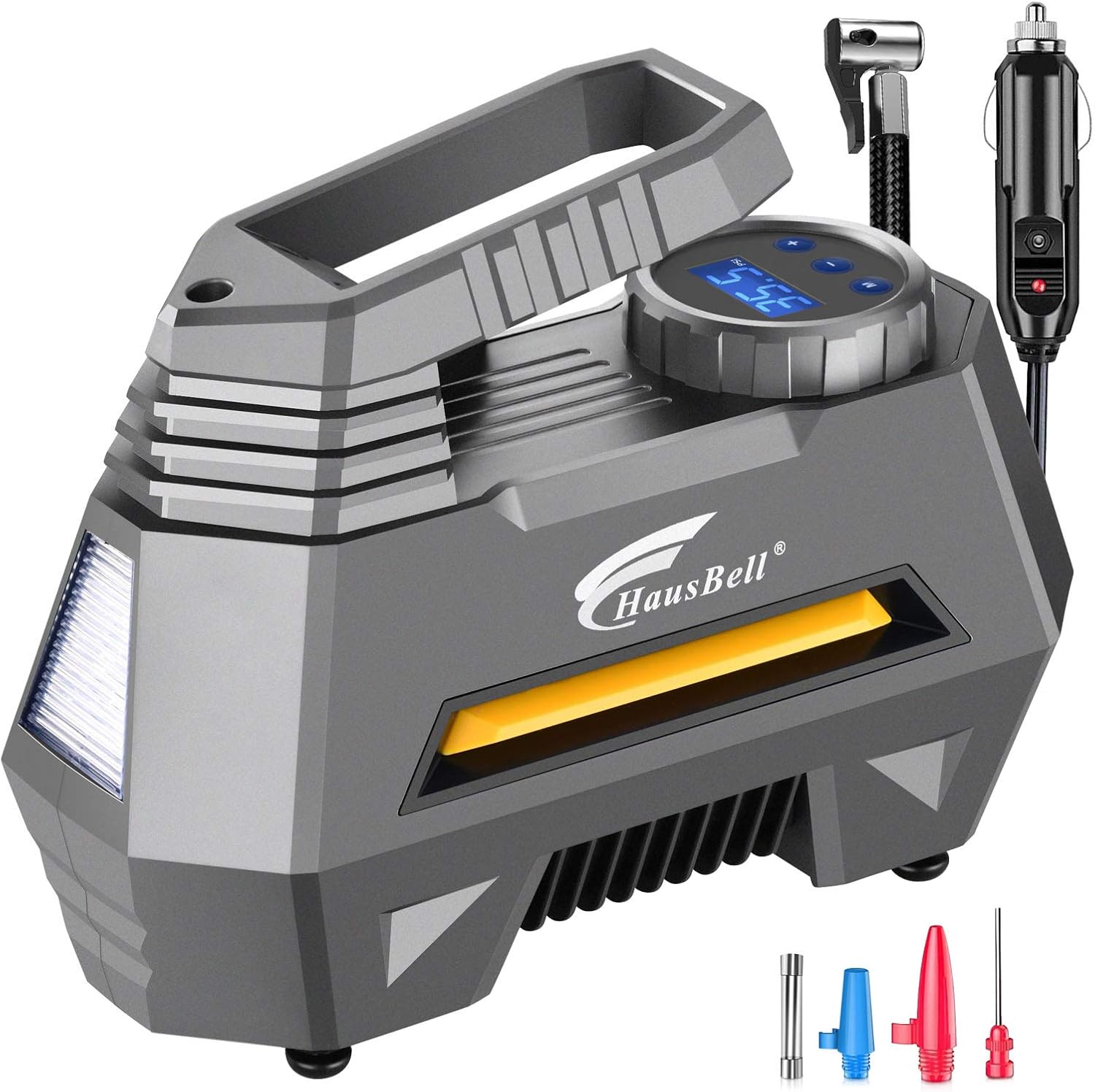
So not technically a mod to your vehicle since you don’t have to make it a permanent fixture, but one that is as necessary as the others: an air compressor! If you’re doing much off-roading, you will want to be airing down your tires for added traction on difficult terrain – and that means airing back up at trail’s end. You’re not always going to find a gas station with a compressor, so just carry one with you! You can go from a smaller model that plugs right into your cigarette lighter and often has a digital display and built-in flashlight [like the one I have (pictured) or this other one], to a top-of-the-line beast like the ARB 12V Twin On Board Air Compressor. If nothing else, an air compressor will save you in winter when your tires getting lazy.
Honorable Mention
Steel Front Bumper

If you thought that the air compressor was a cop out, then you will be happy to know that I have an “understudy” for #5: a steel front bumper! Let’s face it, bumpers are not what they used to be. Plastic has come to replace metal, and so if you plan to push through brush or want to avoid damage to your rig in confined spaces (like between trees), then you will want to get a steel bumper. I recommend getting the front before the rear since where the front goes, the rest of the vehicle tends to follow. Although a heavier bumper will reduce your gas mileage, (1) did you get an off-roader expecting good gas mileage?, and (2) the damage you will save your vehicle will make it worthwhile.
With the Cherokee, I went with Oklahoma City-based Mike’s Metal Fabrication and their High Clearance bumper with its associated bull-bars. The Tacoma got the ARB Summit Front Bumper (pictured) because of the way its bull-bar specifically did not interfere with the car’s radar sensor, while installation of its lights I left to Pete at Aylestock Automotive. For the Tundra, I will most likely go with ARB again for the same reason I chose them for the Tacoma, but I am also considering bumpers from Fab Fours and CBI Offroad Fab.
Read my recollections of off-roading adventures at The Expedition Memoirs!


